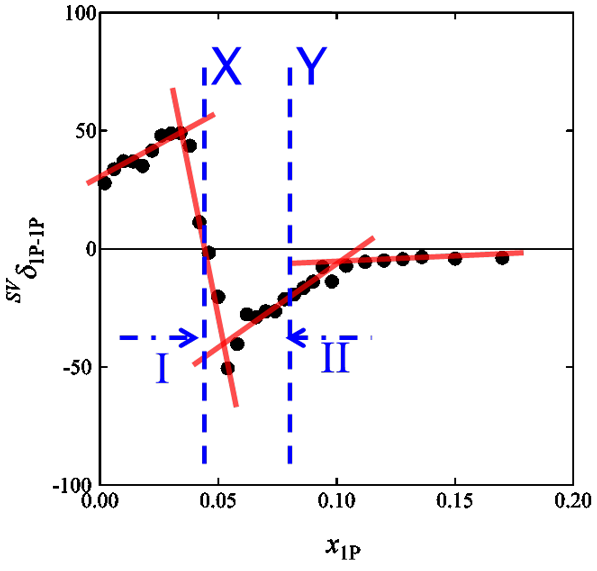
Fig. 1. SVδ1P-1P for aqueous 1-propanol.
Gibbs energy, G, contains important information about many-body interactions in the (T, p, nB) variable system. Higher order derivatives of G with respect to appropriate independent variable provide more detailed and deeper information. In our previous report, SVδB, which corresponds to a third derivative of G, in aqueous 1-propanol, 2-butoxyethanol, and glycerol was determined experimentally. In this report, we determine SVδB-B by graphical differentiation of SVδB with respect to mole fraction. The results of aqueous 1-propanol and 2-butoxyethanol show steps. The points where SVδB-B = 0 (X) corresponds to the peak-top of the third derivative quantity, SVδB, where the hydrogen bond connectivity vanishes. In the same way, the middle point of the second step (Y) is considered as the point where region Scheme II starts. Furthermore, SVδ1P-1P for 1-propanol in dilute range increases linearly, but SVδBE-BE for 2-butoxyethanol caves upward in concave manner. The solute dependence of the effect to hydrogen bonding network becomes apparent from SVδB-B. SVδGly-Gly for glycerol shows the step, and the middle point of the step is considered as the end of Scheme I, which was difficult to see in SVδGly.
Fig. 1. SVδ1P-1P for aqueous 1-propanol.
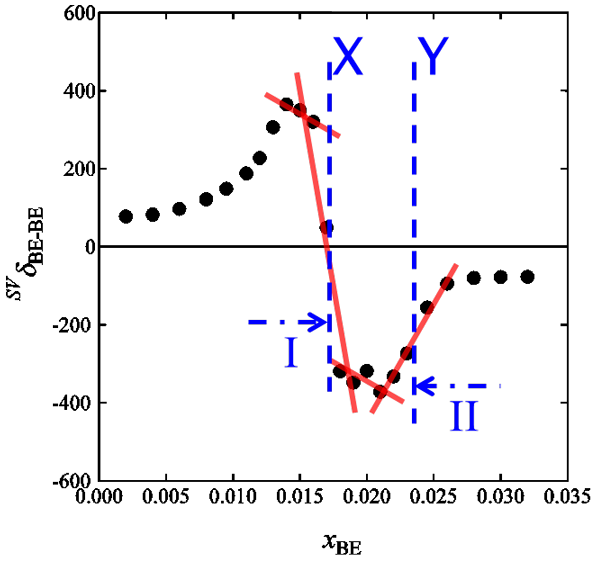
Fig. 2. SVδBE-BE for aqueous 2-butoxyethanol.
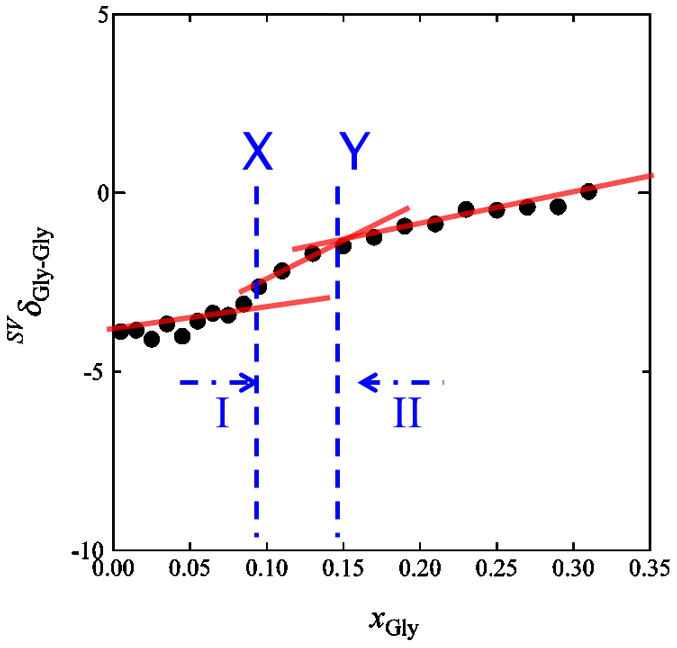
Fig. 3. SVδGly-Gly for aqueous glycerol.