Heat Capacity Measurements of
Liquid Samples on PPMS
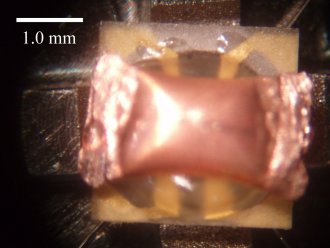
We developed a sample cell for the heat capacity measurement of liquid samples
on PPMS (Quantum Design). It is made of copper with thin tube; 1.0 mm in
diameter, 3 mm long and 0.1 mm thick. The mass is approximately 9 mg. After
putting the sample with a syringe, the tube is sealed at both ends. While the
overall performance is rather good, some improvement must be considered for
the measurement below 1.5 K where the contribution of the electronic heat
capacity becomes significant.
(by H. Suzuki & A. Inaba)
|
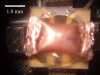
Photo 1. A cell for liquid samples on the sample stage of PPMS.
|
|
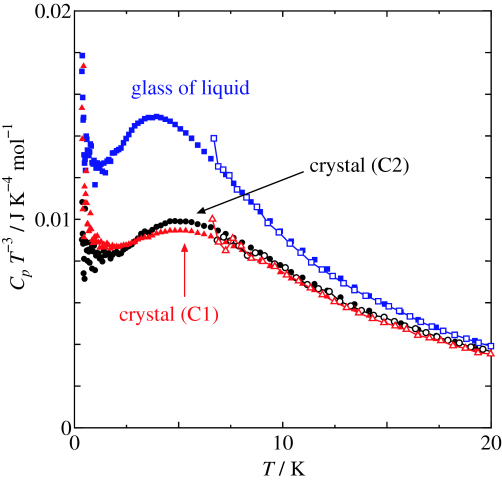
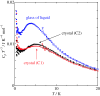
Fig. 1. An example to show the overall performance.
Cp /T 3 plot for the
three phases of 8*OCB. The filled-marks are the data obtained on PPMS
and the open-marks are those obtained by an adiabatic calorimeter.
|
|
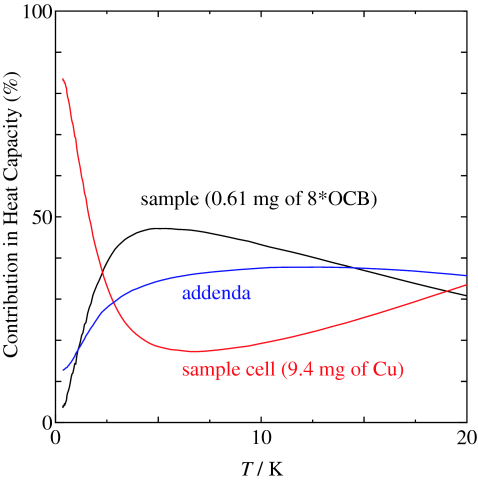
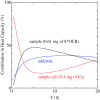
Fig. 2. The contribution from the sample (glass of liquid phase
for 8*OCB), addenda and cell to the total heat capacity.
|
Construction of Single Crystal Calorimetry
under Pressure at Low Temperatures
and Magnetic Fields
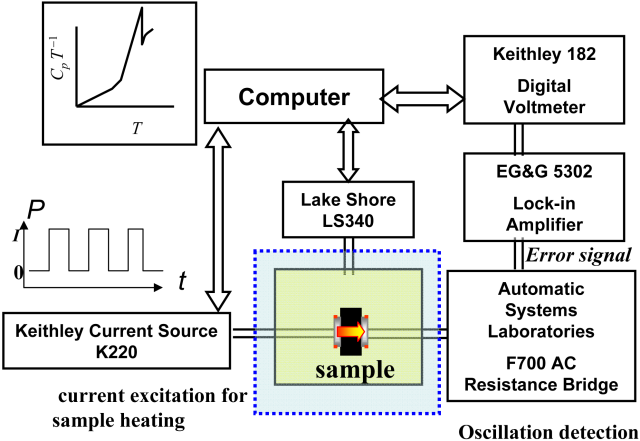
Aiming at measuring heat capacities of tiny single crystals weighing about
100 μg – 1 mg under pressure, we have developed an ac calorimeter
available under magnetic fields and at low temperatures. The small chip-type
resistances of ruthenium oxide are used as a thermometer and a heater. Using
a piston-cylinder pressure cell constructed by Cu-Be alloy, we can perform
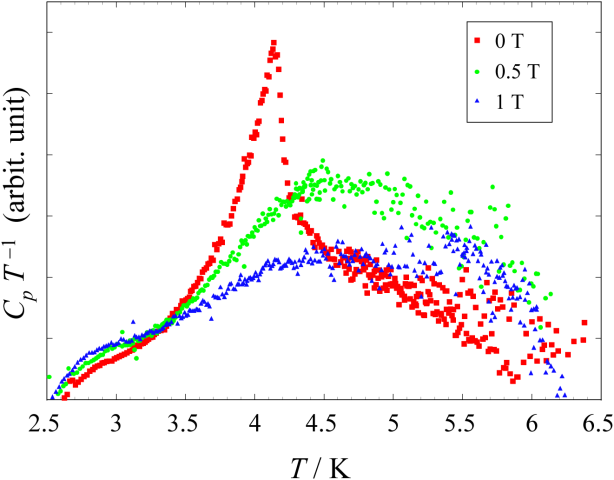
measurements up to 2 GPa. To compare the results with the data obtained by
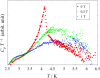
relaxation calorimetry, the heat capacity data for 100 μg [Mn4 (hmp)6 {N(CN)2}2] (ClO4)2 sample is measured by this
calorimeter at ambient pressure. The improvement of the system is now under way.
(by O. Kubota & Y. Nakazawa)
|
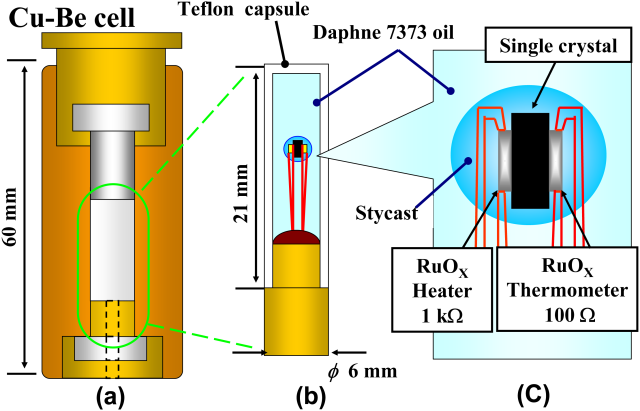
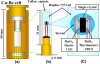
Fig. 1. Schematic drawing of the (a) Cu-Be pressure cell, (b) inside
the teflon capsule, (c) expanded drawing around the sample.
|
|
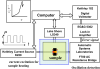
Fig. 2. Block diagram of the ac calorimetry under pressure.
|
|
Fig. 3. CpT −1 vs T under several magnetic fields of [Mn4 (hmp)6 {N(CN)2}2] (ClO4)2 obtained in the pressure cell.
|
Low-Temperature Properties of
Electronic System Using a Schick-Type
Microchip Calorimeter
Highly sensitive calorimetric measurements for small-sized samples are required
in the field of condensed matter physics. To get enough resolution at low
temperatures, heat capacity of addenda should be reduced. We used commercially
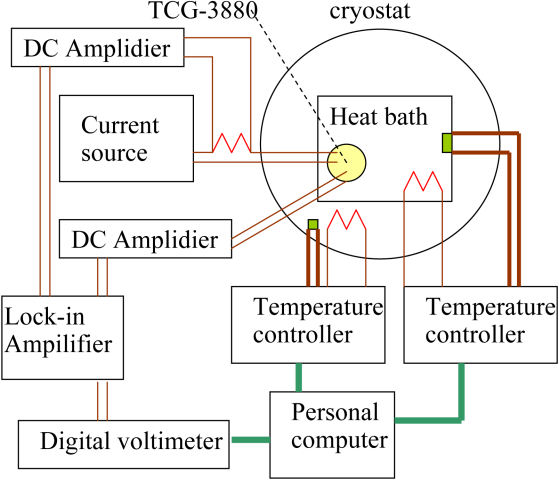
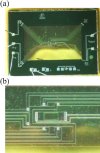
available microchip TCG-3880 which is used for the high-speed calorimetry
technique introduced by Minakov and Schick et al.
We tried to use for measuring heat capacity of several materials which shows
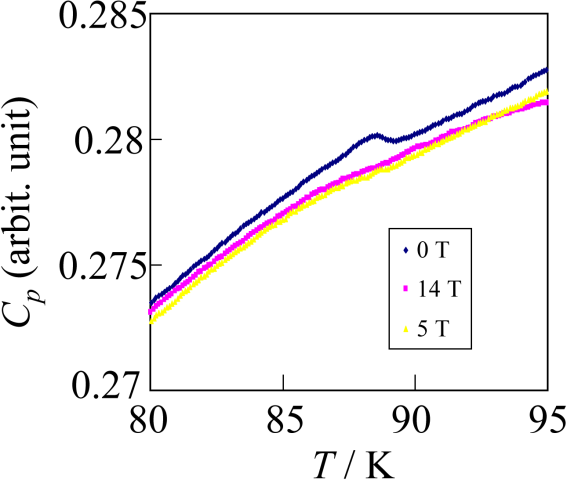
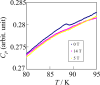
electronic phase transition. We also measured the high-Tc superconductor YBCO (YBa2Cu3O7−x). The critical
temperature (91 K) of YBCO and dissipation of peak under magnetic field
(5 T, 14 T) were detected. These results imply that the microchip are useful
tool for thermodynamic measurements of electronic system at low temperatures.
(by Y. Inoue & Y. Nakazawa)
|
Photo 1. (a) Silicon frame and silicon nitride membrane of TCG-3880.
(b) Expanded picture of the central part of the membrane.
|
|
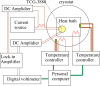
Fig. 1. Block diagram of the detection system of the present calorimeter.
|
|
Fig. 2. Temperature dependence of the Heat capacity of YBCO (YBa2Cu3O7−x) obtained under
0 T, 5 T, and 14 T. A sharp peak under zero field is disappeared
under magnetic fields.
|
Development of a MEMS Device
to Measure Thermal Conductivity of
Submilimeter Organic Single Crystals
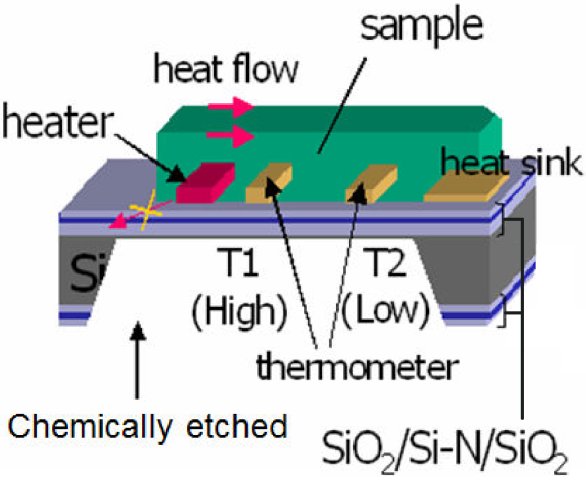
A new thermodevice is developed to measure thermal conductivity of organic
single crystals that often grow only minute. The technique of Micro Electro
Mechanical Systems (MEMS) is employed, so that samples with the length from
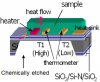
a few tens to several hundreds of μm can be mounted. A 1-μm thick
membrane of SiO2/Si-N/SiO2
multilayers sustained by a surrounding thick silicon substrate is equipped
with a micro-film heater and resistive thermometer films for the thermal
conductivity measurement using photolithography. When we carefully attach
a sample more than 10 μm thick on this structure, heat flow through
the membrane can be appropriately subtracted. The availability of the
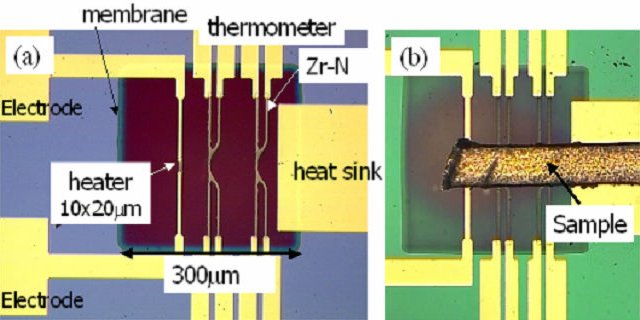
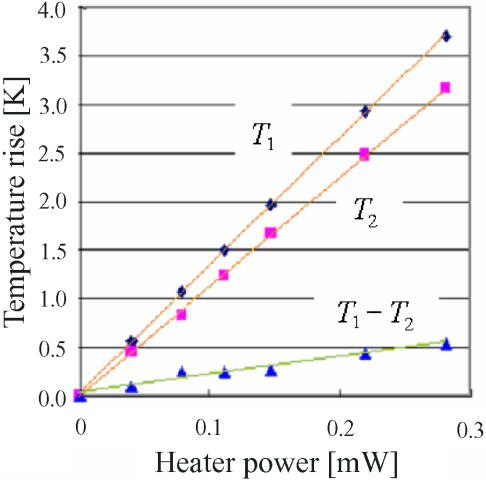
thermodevice is verified by measuring a chromel wire 76 μm in diameter
and about 300 μm in length. The result gives the value of 12 W m−1 K−1 at 100 K,
well reproducing those in literatures.
(by Y. Okada & J. Takeya)
|
Fig. 1. Structure of the MEMS device to measure thermal conductivity.
|
|
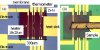
Photo 1. Photograph of the MEMS device to measure thermal conductivity.
(a) Close view of the MEMS device. (b) The MEMS device attached with
the chromel wire for a reference.
|
|
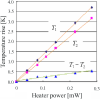
Fig. 2. Temperature rise at two posisions in the chromel wire
with varying heater power.
|

|
Equation 1.
|
Copyright © Research Center for Structural Thermodynamics,
Graduate School of Science, Osaka University. All rights reserved.